


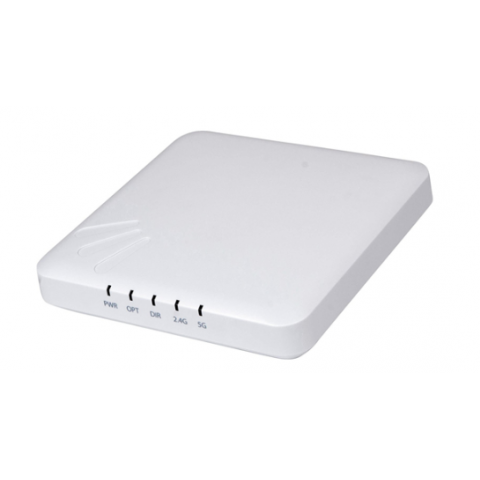
Ruckus ZoneFlex R300
SKU:
901-R300-WW02
(GIÁ BÁN có thể liên tục thay đổi không báo trước)
Ruckus Wireless ZoneFlex R300 901-R300-WW02 Indoor Wireless Access Point dual band 802.11n
TEAM 1
TEAM 2
Thông số kỹ thuật sản phẩm
Cấu hình Ruckus Wireless ZoneFlex R300 901-R300-WW02 Indoor Wireless Access Point dual band 802.11n
| Ruckus R300 | |
| Physical Characteristics | |
| Power | DC Input: 12 VDC 1.0A |
| Power over Ethernet 802.3 af | |
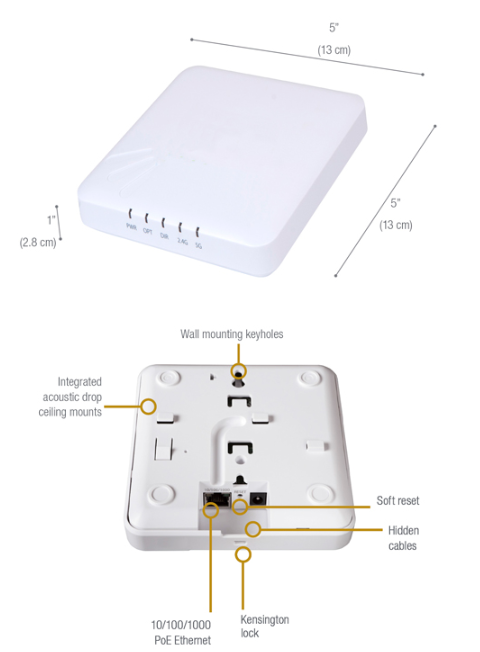
| Physical Size | 13cm (L), 13cm (W), 2.8cm (H) |
| 5.1 in (L), 5.1 in (W), 1.1 in (H) | |
| Weight | 397 grams (0.875 lbs.) |
| Ethernet Ports | 1 auto MDX, auto-sensing 10/100/1000 Mbps, RJ-45, POE port |
| Lock Options | Hidden latching mechanism |
| Kensington Lock Hole | |
| T-bar Torx | |
| Environmental Conditions | Operating Temperature: 0°C - 40°C |
| Operating Humidity: 10% - 95% non-condensing | |
| Power Draw | DC Input |
| Idle: 1.6W | |
| Typical: 3.6W | |
| Peak: 8.4W | |
| Power over Ethernet Input | |
| Idle: 3.4W | |
| Typical: 5.3W | |
| Peak: 9.7W | |
| Performance and Capacity | |
| Max Phy Rate | 300 Mbps / radio |
| Concurrent Stations | Up to 256 clients per AP |
| Simultaneous VoIP Clients | Up to 30 |
| RF | |
| Antenna | Adaptive antenna that provides up to 128 unique antenna patterns |
| 64 patterns per band | |
| RF Power Output (Aggregated) | 26 dBm for 2.4GHz† |
| 24 dBm for 5GHz† | |
| Physical Antenna Gain | Up to 3 dBi per spatial stream |
| Beamflex1 SINR TX Gain | Up to 4 dB |
| Interference Mitigation | Up to 10 dB |
| Minimum RX Sensitivity | Up to -101 dBm |
| Management | |
| Deployment Options | Standalone (individually managed) |
| Managed by ZoneDirector ( 9.8.1 & above) | |
| Managed by FlexMaster | |
| Managed by SmartCell (2.5.1 & above) | |
| Configuration | Web User Interface (HTTP/S) |
| CLI (Telnet/SSH), SNMP v1, 2, 3 | |
| TR-069 vis FlexMaster | |
| Auto AP Software Updates | FTP or TFTP, remote auto available |
| Wi-Fi | |
| Standards | IEEE 802.11a/b/g/n |
| 2.4GHz and 5GHz | |
| Supported Data Rates | 802.11n: 6.5Mbps – 130Mbps (20MHz) 6.5Mbps – 300Mbps (40MHz) |
| 802.11a: 54, 48, 36, 24, 18, 12, 9 and 6Mbps | |
| 802.11b: 11, 5.5, 2 and 1 Mbps | |
| 802.11g: 54, 48, 36, 24, 18, 12, 9 and 6 Mbps | |
| Radio Chains | 2 x 2 |
| Spatial Streams | 2 |
| Channelization | 20MHz and/or 40MHz |
| Frequency Band | IEEE 802.11 b/g/n: 2.4 – 2.484 GHz |
| IEEE 802.11a/n: 5.15 – 5.25 GHz; 5.25 – 5.35 GHz; 5.47 – 5.725 GHz; 5.725 – 5.85 GHz | |
| Operating Channels | US/Canada: 1-11 |
| EU (ETSI X30): 1-13 | |
| Channel availability is country dependent according to the local regulations | |
| 5 GHz Channels - country dependent | |
| 5GHz UNII-1 (2014) | |
| BSSID | Up to 27 user configurable |
| Power Save | Supported |
| Wireless Security | WPA-PSK, WPA-TKIP, WPA2 AES, 802.11i |
| Authentication via 802.1X with the ZoneDirector, local authentication database, support for RADIUS, LDAP, and ActiveDirectory | |
| Certifications** | U.S., Europe, Australia, Brazil, Canada, Chile, China, Colombia, Costa Rica, Hong Kong, India, Indonesia, Israel, Japan, Korea, Malaysia, Mexico, New Zealand, Peru, Philippines, Saudi Arabia, Singapore, South Africa, Taiwan, Thailand, UAE, Vietnam |
| WEEE/RoHS compliance | |
| EN-60601-1-2 (Medical) | |
| Wi-Fi Alliance | |
| EN 50121-1 Railway EMC | |
| EN 50121-4 Railway Immunity | |
| IEC 61373 Railway Shock & Vibration | |
Trong thời đại khoa học công nghệ phát triển như hiện nay, mạng không dây wifi không còn xa lạ gì đối với chúng ta. Ở bất kỳ đâu như khách sạn, các nhà hàng, quán café, các công ty … hay thâm chí cả thành phố chúng ta đều có thể thấy xuất hiện mạng wifi không dây. Với nhu cầu sử dụng wifi cao như vậy, không ít những hãng sản xuất thiết bị mạng và giải pháp mạng đưa ra các sản phẩm phát và hỗ trợ phát wifi ví dụ như Linksys, D-Link. TP- Link…. Tuy nhiên thì những sản phẩm này chủ yếu hướng tới đối tượng khách hàng gai đình hoặc văn phòng vừa và nhỏ. (Small Office Home Office)
Đối với những doanh nghiệp lớn hơn có nhu cầu sử dụng wifi chuyên dụng chịu tải cao cho nhiều người dùng như các trường học, khách sạn, bệnh viện, khu triển lãm, …. rất cần hệ thống WiFi có tầm phủ sóng rộng với kết nối ổn định. Bên cạnh đó phải có tính bảo mật cao, đề phòng trường hợp có kẻ xấu muốn xâm nhập vào thiết bị của bạn với ý đồ không tốt. Hơn nữa phải có khả năng quản lý và mở rộng để thích ứng với những đòi hỏi sử dụng từ phía người dùng. Nếu bạn đang tìm kiếm một giải pháp wifi chuyên dụng, chúng tôi đề xuất sản phẩm Wifi Ruckus ZoneFlex R300.

Tại sao nên sử dụng WiFi Ruckus ?
WiFi Ruckus cung cấp một hệ thống mạng WLAN thông minh, dễ sử dụng và với giá thành hợp lý, có độ bảo mật tương đối cao. Độ phủ sóng tốt và đáng tin cậy với hiệu suất hoạt động ổn định. Tránh được tối đa các trục trặc có thể gặp với hệ thống mạng WLAN.
Hiện nay, công ty chúng tôi đang phân phối đa dạng mẫu mã các dòng sản phẩm Wifi Ruckus ra thị trường. Mỗi sản phẩm chúng tôi cung cấp phân phối ra thị trường điều có chất lượng tốt, hiệu quả khi sử dụng, được bảo hành 12 tháng, được trao đổi lấy mới trước thời hạn cho phép. Công ty chúng tôi có đội ngũ nhân viên tay nghề cao nhiều năm kinh nghiệm trong lĩnh vực mạng có dây và không dây sẽ tư vấn cho khách hàng lựa chọn cho mình sản phẩm ưng ý nhất.
Hiện nay, công ty chúng tôi đang phân phối đa dạng mẫu mã các dòng sản phẩm Wifi Ruckus ra thị trường. Mỗi sản phẩm chúng tôi cung cấp phân phối ra thị trường điều có chất lượng tốt, hiệu quả khi sử dụng, được bảo hành 12 tháng, được trao đổi lấy mới trước thời hạn cho phép. Công ty chúng tôi có đội ngũ nhân viên tay nghề cao nhiều năm kinh nghiệm trong lĩnh vực mạng có dây và không dây sẽ tư vấn cho khách hàng lựa chọn cho mình sản phẩm ưng ý nhất.
Bạn cần thêm bất cứ thông tin gì về giá wifi Ruckus , đừng ngại hãy nhấc máy lên gọi ngay tới số hotline hoặc truy cập website của chúng tôi để được hỗ trợ tư vấn miễn phí.
Sản phẩm bạn quan tâm

Địa chỉ: Số 123 Nhà A10 Nghĩa Tân, P.Nghĩa Tân, Q.Cầu Giấy, Hà Nội, Việt Nam
Giấy chứng nhận đăng ký kinh doanh số 0101445044
Do sở kế hoạch và đầu tư Thành Phố Hà Nội cấp ngày 20/01/2004
Điện thoại: 024.37714430 - 024.37714417 - 024.37711222
Nhận báo giá: contact@netsystem.vn
Skype: netsystemvn
Hotline/Zalo: 0915495885
Hotline/Zalo: 0914769119
Hotline/Zalo: 0914025885
Hotline/Zalo: 0916498448

Giấy chứng nhận đăng ký kinh doanh số 0101445044
Do sở kế hoạch và đầu tư Thành Phố Hà Nội cấp ngày 20/01/2004
Điện thoại: 024.37714430 - 024.37714417 - 024.37711222
Nhận báo giá: contact@netsystem.vn
Skype: netsystemvn
Hotline/Zalo: 0915495885
Hotline/Zalo: 0914769119
Hotline/Zalo: 0914025885
Hotline/Zalo: 0916498448

